
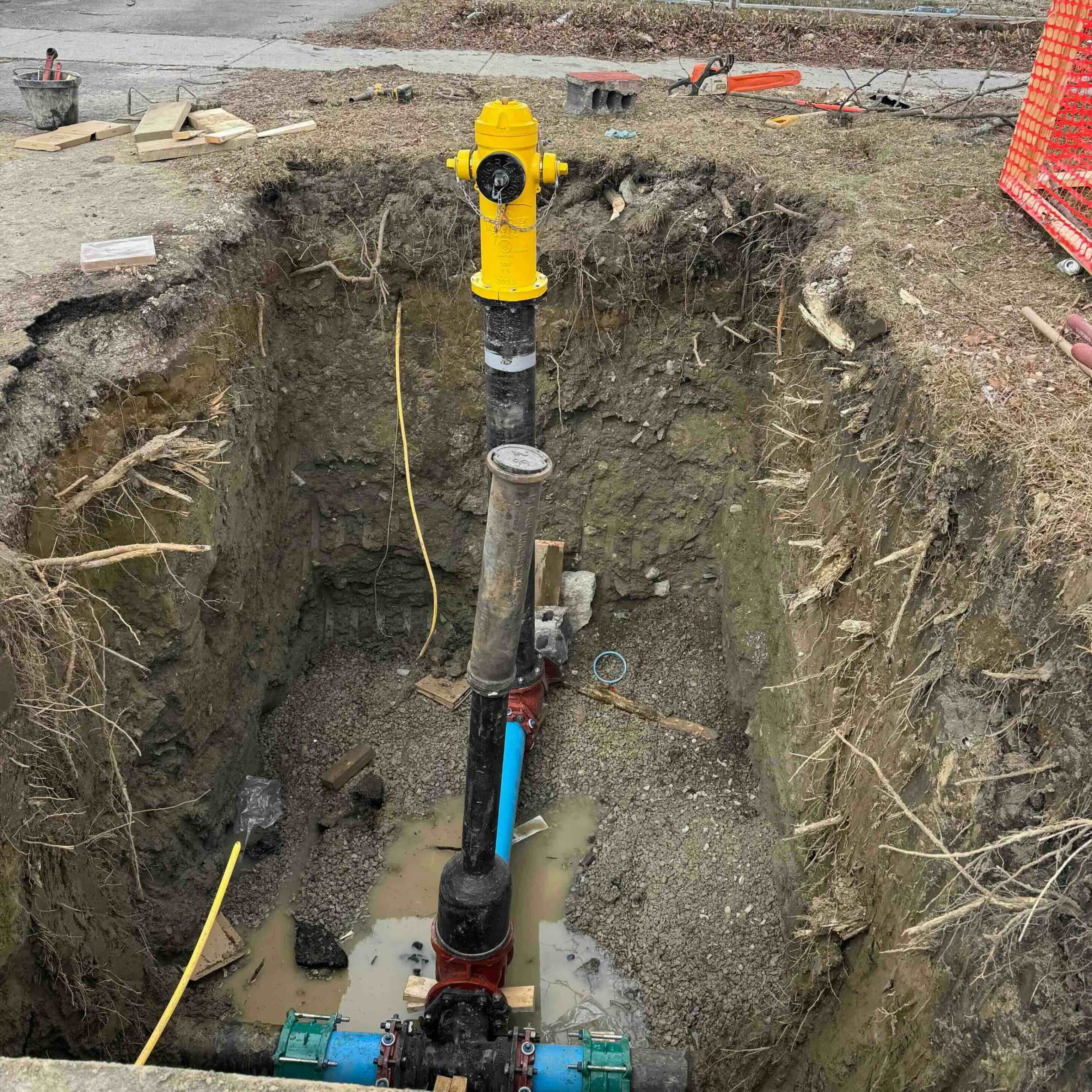
Fire access is one of the most important early-stage feasibility checks in a Toronto garden suite or multiplex project.
Not because the rule itself is especially difficult, but because if a site requires hydrant-related coordination or other external approvals, the timeline can become more complex than many investors and landowners expect. That can affect design decisions, approvals, and overall carrying-cost exposure if the issue is not identified early.
We saw this firsthand on a recent project.
In our case, the fire access and hydrant issue was identified early, before drawings were finalized and before the permit process had progressed too far. That early discovery mattered because it allowed the issue to be assessed before it became a larger downstream problem.
City staff were welcoming in our experience, and the matter was addressed as efficiently as the process allowed.
In our experience, municipal coordination is not the issue in itself. The real issue is failing to identify timeline-sensitive constraints early enough.
That is the broader lesson.
Some project issues can be improved through better planning, tighter consultant coordination, and stronger execution. But when a project depends on external coordination, portions of the schedule may be less flexible. That is why fire access should never be treated as a minor detail to sort out later in the process.
Why this matters
For investors and landowners, fire access should be treated as an early feasibility item, not a late design check.
If you are evaluating a site for a garden suite or multiplex strategy in Toronto, hydrant proximity and fire department access conditions can influence:
- feasibility
- site planning
- design assumptions
- approvals strategy
- construction timing
- carrying-cost exposure
A site can look strong on frontage, depth, and unit count, but still create unnecessary friction if fire access conditions are weak.
That is exactly why BLVD Build treats fire access, hydrant distance, tree constraints, frontage, depth, and approvals risk as early-stage feasibility filters rather than last-minute design notes.
Toronto garden suite fire access: plain-language checks
At a high level, early fire access review often includes questions such as:
- Is there a fire hydrant within an acceptable distance of where a firefighting vehicle would park?
- Is the path of travel from the street or firefighting vehicle to the garden suite entrance workable?
- Is there a clear access path with sufficient width and height?
- Are there gates, servicing conflicts, trees, easements, or other site conditions that could affect access?
These items must always be confirmed based on the specific site, design, and permitting path.
What smart due diligence looks like
Before buying a property, or before investing too far into drawings, fire access should be reviewed alongside the rest of the site’s core feasibility conditions.
A practical early checklist should include:
- hydrant proximity
- likely firefighting vehicle parking assumptions
- access path width and height
- gate and rear-yard access constraints
- servicing conflicts
- tree constraints
- easements
- approvals and permitting risk
A disciplined review process protects more than design quality. It protects schedule, cost control, and the quality of the investment decision.
The real takeaway
The biggest mistake is not discovering an issue that needs coordination.
The biggest mistake is discovering it too late.
When fire access is reviewed early, the team can make better decisions about site planning, risk, timing, and underwriting. When it is ignored until later, the same issue can become more expensive and more disruptive than it needed to be.
At BLVD Build, this is part of a broader developer-builder approach: evaluate the site properly, identify hidden friction early, and protect the project before significant time and money are committed.
That approach reflects how the company screens opportunities and manages projects from feasibility through approvals and construction.